
5 Reasons to Avoid DIY Roof Repair
Key Takeaways
- Roofing is one of the most dangerous trades in the country, and working at height, on steep slopes, and without fall protection training carries real risk for anyone who isn't trained for it.
- DIY repairs often cost more in the long run: fixing a failed DIY job, plus any damage it caused, can exceed what professional repair would have cost from the start.
- DIY work isn't covered by a contractor workmanship warranty and can affect eligibility for extended manufacturer warranty programs.
- Flat roofing systems like TPO and EPDM have their own repair pitfalls: using the wrong sealant or patch product can damage the membrane further instead of fixing it.
- Colorado's hail, high winds, and freeze-thaw cycles put extra stress on installation errors, letting small mistakes worsen faster than they would in milder climates.
- After storm damage, document what's visible from the ground and contact a licensed contractor. The Colorado Roofing Association's member directory can help homeowners find one.
Colorado roofs face hail, intense sunlight, high winds, and repeated freeze-thaw cycles. Damage that looks minor from the ground may involve shingles, flashing, decking, or ventilation beneath the surface, and on flat roofs, membrane seams and patch materials add another layer of risk. Attempting a repair without the right training and equipment can put the homeowner, the roofing system, and available warranty coverage on the line.
Is DIY Roof Repair Dangerous?
Roofing is one of the most dangerous trades in the country, and injuries and fatalities among roofers happen far too often. Most of that risk comes down to a few consistent factors: working at height, steep or slippery slopes, and the absence of fall protection equipment and training.
Professional roofing crews train specifically for these conditions and use harnesses, anchor points, and other safety equipment as standard practice. A homeowner without that training or equipment faces the same fall risks the moment they get on a ladder or step onto a roof, whether it's a steep-slope shingle roof or a low-slope flat roof. That risk alone is one of the strongest reasons to hire a qualified contractor rather than attempt the repair personally.
Does DIY Roof Repair Actually Save Money?
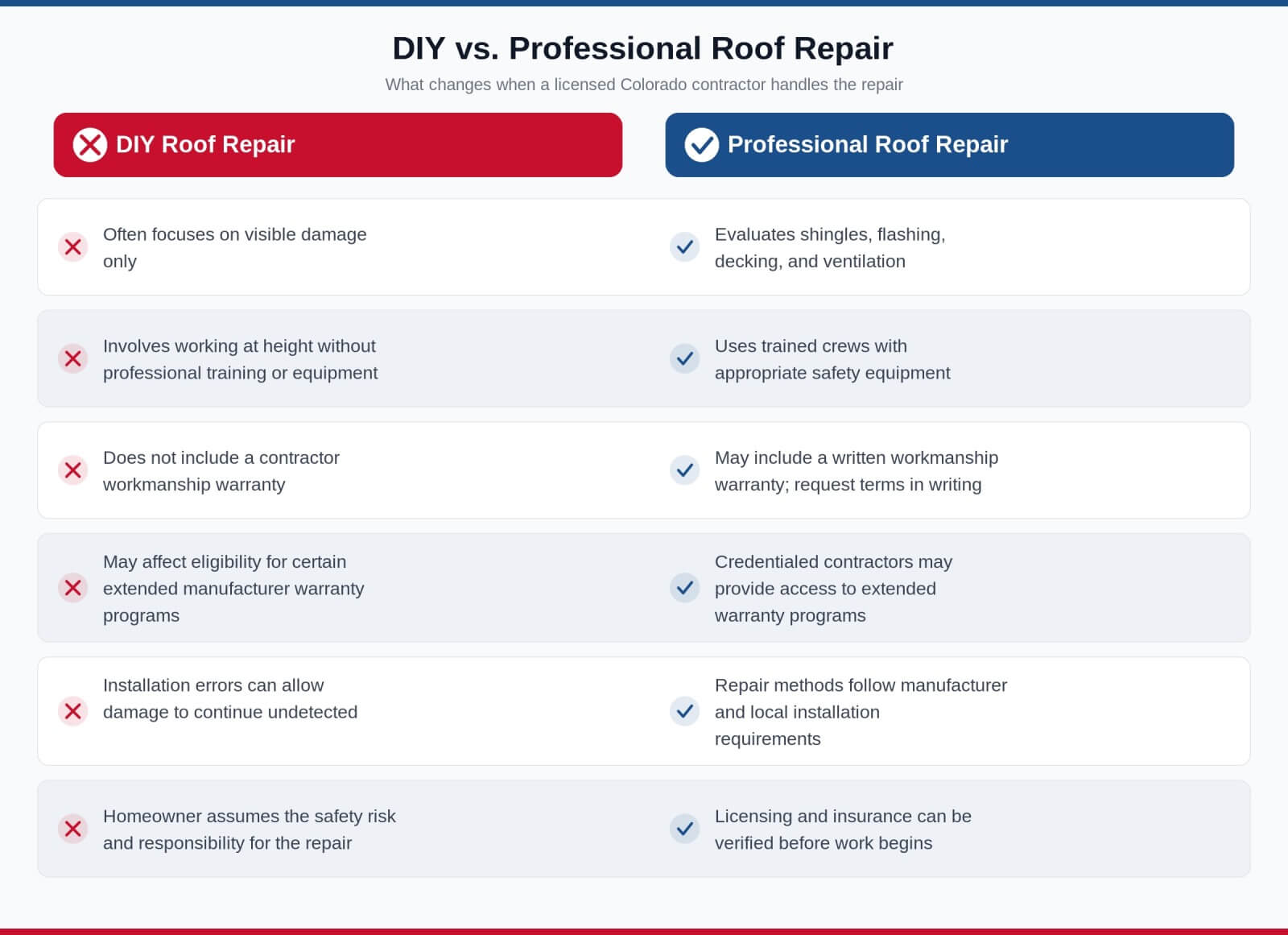
Although professional repair costs more upfront, it may cost less overall than correcting a failed DIY repair and addressing any additional damage it caused. A qualified roofing contractor assesses the full roofing system, including the shingles, flashing, decking, and ventilation, rather than focusing only on visible surface damage. A homeowner without roofing experience may repair the symptom while missing the underlying cause.
What Can Go Wrong With DIY Roof Repairs?
Improper installation is one of the most common risks of DIY roof work, and the specifics differ depending on the type of roof.
On shingle roofs, nails driven too deeply can damage shingles, misaligned starter strips can leave roof edges vulnerable to water intrusion, and improperly installed flashing can allow water into roof transitions. These errors may not be visible from the ground or produce a leak immediately.
Flat roofing systems bring a different set of pitfalls. Many Colorado homes and commercial buildings use low-slope membrane roofing such as TPO or EPDM, and homeowners attempting a patch repair sometimes reach for asphalt-based sealants or generic caulk that aren't compatible with the membrane. Incompatible products can prevent a proper seal, degrade the membrane over time, or trap moisture underneath, turning a small leak into a larger repair. Manufacturer-approved patch kits and seam materials, applied by someone trained on that specific membrane type, are the more reliable path.
Colorado's hail, temperature swings, and freeze-thaw cycles can place additional stress on installation errors of any kind and allow minor problems to worsen over time.
Does DIY Roof Repair Affect Warranty Coverage?
DIY roof repairs may save money upfront, but they can also create larger problems if done incorrectly. While manufacturer warranties typically cover defects in roofing materials, they generally do not cover damage caused by improper installation or repairs.
Roofing issues such as incorrect flashing or fastening are not always visible and may not cause immediate leaks, making mistakes difficult for homeowners to identify. Unlike DIY repairs, professional roofing contractors are trained to follow industry standards and often provide a workmanship warranty that covers the repair for a specified period after completion.
Before attempting a repair, homeowners should review their warranty terms and consider consulting a qualified roofing contractor. In many cases, a professional repair can help avoid more costly repairs down the road. For a fuller breakdown of how these terms work, see CRA's guide to roofing warranty terms.
DIY vs. Professional Roof Repair
What Should Colorado Homeowners Do After Roof Damage?
After hail, high winds, heavy snow, or a rapid temperature shift, a safe first step is to document any visible changes from the ground and schedule a professional inspection if damage is suspected. Some counties in eastern Colorado average six or more hail days per year, according to Colorado State University data, making periodic post-storm checks a practical habit for Colorado homeowners. A qualified contractor can assess the full scope, whether the roof is shingle or a flat membrane system, document damage for insurance purposes, and advise on whether repair or replacement is warranted.
Before hiring a contractor, homeowners should ask for proof of insurance, confirm any applicable local licensing requirements, and request the proposed scope of work and warranty terms in writing. The Colorado Roofing Association member directory can help homeowners find qualified, insured contractors in their area.
Frequently Asked Questions
Should homeowners fix their own roof?
In most cases, no. Roofing work involves fall risk, requires proper equipment, and demands knowledge of installation standards, whether the roof is asphalt shingle or a flat membrane system like TPO or EPDM. Errors that are not immediately visible can cause significant damage over time, particularly under Colorado's climate conditions.
Is it safe to inspect a roof yourself?
A ground-level inspection is reasonable after a storm. Getting onto the roof without proper fall protection and training is not. Homeowners who suspect damage should document what is visible from the ground and contact a qualified contractor for a professional inspection.
Is DIY roof repair cheaper than hiring a contractor?
Not necessarily. Materials carry upfront costs, and incomplete repairs, including flat roof patches made with the wrong sealant, often lead to recurring or worsening damage. The cost of correcting a failed DIY repair can exceed what professional work would have cost initially, and DIY repairs do not come with warranty coverage.