
Door-To-Door Roofing Contractors: Who To Trust And Who To Avoid
Many Colorado roofing contractors, including CRA members, visit neighborhoods in person after a major hailstorm or windstorm. A knock at the door is a normal part of how local roofing businesses operate in Colorado.
Key takeaways:
- A knock at the door is neither proof of legitimacy nor proof of fraud; treat it as an unsolicited sales contact and verify the company independently.
- The same evaluation criteria apply to any contractor, whether they knocked on the door, came by referral, or were found online.
- A missing verifiable local presence is one important warning sign, alongside failure to verify licensing or permits, insurance, references, contract terms, and payment practices.
Is It Normal for a Roofing Contractor to Knock on Your Door?
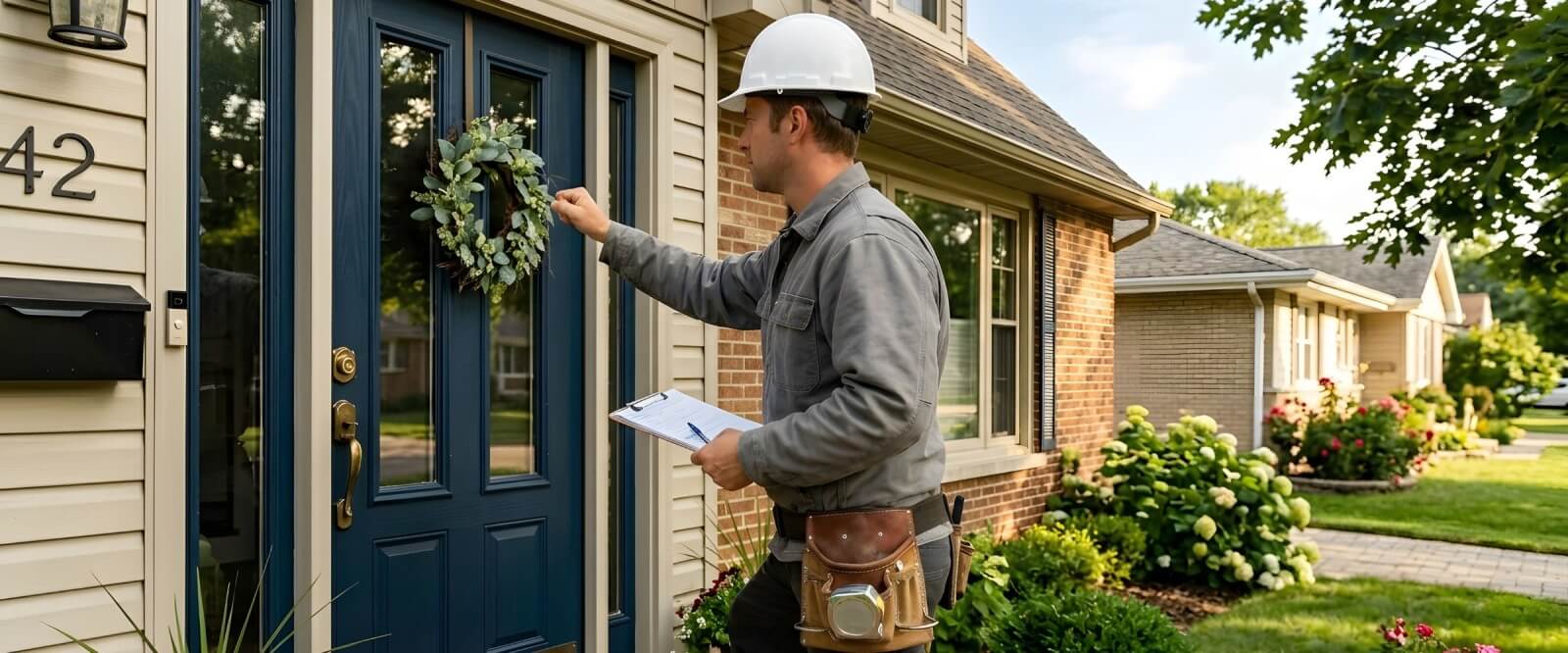
Yes. Many reputable Colorado roofing contractors, including CRA members, canvass storm-affected neighborhoods directly, and a knock at the door is not a warning sign on its own.
After a significant hail or wind event, local contractors often reach out to homeowners in the area as routine outreach, not as a tactic reserved for less scrupulous operators. What matters is the same evaluation homeowners would apply to a referral or an online search.
What Should Homeowners Look For in Any Contractor?
A trustworthy roofing contractor provides a written proposal, allows time to compare options, and can verify their licensing, permits, and insurance directly.
- A written proposal outlining the anticipated cost, materials, and scope of work, rather than relying on a verbal agreement. For insurance claims, compare it with the insurer’s initial scope, understanding that the scope may change if additional work, code requirements, or manufacturer specifications are identified.
- No pressure to sign immediately. A contractor confident in their work will give homeowners time to compare proposals.
- Verified insurance. Ask for a certificate of insurance, then confirm current coverage directly with the carrier or agent listed on it, rather than accepting the certificate at face value.
- References and reviews as one input, not proof on their own. Online reviews on Google, Yelp, or the Better Business Bureau are worth checking alongside direct references from past clients in the area, ideally clients the estimator personally worked with more than a year ago, so any workmanship issues would have had time to surface. The Better Business Bureau and the Colorado Attorney General's office can also confirm a business's registration and complaint history.
- No requirement to pay in full upfront. Insurance checks and full payment should be held until the work is complete, not turned over in advance.
- Permit and licensing compliance. Requirements vary by city and county, so it's worth confirming applicable permit and licensing requirements with the local building department. Colorado law also includes cancellation rights in certain roofing contracts and prohibits contractors from waiving a homeowner's insurance deductible; CRA's guide on waiving insurance deductibles and contract requirements covers both in more detail, and homeowners should also review their specific contract terms or ask their contractor directly.
- Clarity on paperwork. Some documents labeled an "estimate" or "authorization" function as a binding contract. It's reasonable to ask directly whether signing a document commits to services before doing so.
| Trust Signal | Red Flag |
|---|---|
| Written, itemized proposal covering cost, materials, and scope | Verbal-only agreement with no paperwork to compare |
| No pressure to sign the same day | Insists on an immediate signature or on-the-spot decision |
| Certificate of insurance, confirmed directly with the carrier or agent | Insurance certificate offered but not independently verifiable |
| Verifiable local address and work history | No local address, office, or verifiable presence in the area |
| References from established local clients, plus reviews as one input | No verifiable references, or reviews presented as the only proof needed |
| Payment held until the work is complete | Requires full payment upfront, before work begins |
| Confirms permit and licensing requirements with the local building department | Avoids questions about permits, licensing, or local requirements |
Homeowners with questions about the insurance claims process can also visit the Rocky Mountain Insurance Information Association. CRA's 10 questions to ask before hiring a roofing contractor covers this evaluation process in more depth.
What's Different About a Contractor Without a Local Presence?
A contractor with no local footprint can be difficult to reach for a warranty question or a workmanship concern down the road.
Homeowners can check for a local address, confirm licensing and insurance directly, ask for references from other homes in the area or from an insurance agent, and get a few proposals to compare who has that established history and who doesn't.
What Does It Mean to Be a CRA Contractor?
A CRA member contractor has earned that standing by meeting CRA's membership requirements: providing specified licensing documentation and insurance documentation, and agreeing to follow the CRA Code of Ethics.
Colorado does not require a single statewide roofing license, so licensing requirements are set at the municipal level and can vary from one city to the next. CRA membership brings a contractor's standing on those requirements together in one place, giving homeowners a meaningful head start on a decision that's otherwise hard to research alone.
It's still worth confirming current local licensing, permits, and insurance directly, since CRA membership reflects a strong professional standard rather than a guarantee of workmanship. Homeowners can find the full picture in CRA's guide to selecting a professional Colorado roofing contractor.
How Can Homeowners Confirm a Contractor Is a CRA Member?
CRA's member directory lists roofing contractors who are current members in good standing with the association.
For a printable version of these questions, CRA's Consumer Checklist for Selecting a Trusted Roofer is available to download.
Search the CRA member directory to find a contractor near you.
Frequently Asked Questions About Evaluating a Roofing Contractor
What should I do if a contractor asks me to pay in full upfront?
Reputable contractors typically structure payment in stages, with final payment held until the work is complete. A request for full payment before work begins is worth raising directly with the contractor and weighing alongside the same checks that apply to licensing, insurance, and references.
Is it illegal for a contractor to waive my insurance deductible?
Yes. Waiving an insurance deductible is illegal in Colorado. Homeowners who receive that kind of offer can raise it directly with the contractor or contact their insurance company with questions before moving forward.
Is it normal for a roofing contractor to knock on my door after a storm?
Yes. Knocking on doors after a hail or wind event is routine outreach for many legitimate Colorado contractors, including CRA members. On its own, it's neither a red flag nor a guarantee of quality, and the same evaluation applies as it would for a referral or an online search.
How can homeowners confirm a contractor's insurance is current?
Ask for a certificate of insurance, then contact the carrier or agent listed on it directly to confirm coverage is active, rather than relying on the certificate alone.