
Why Proper Attic Ventilation Matters for Your Colorado Home
Key Takeaways
- Attic ventilation keeps air moving under your roof so heat and moisture do not build up.
- Stuffy upstairs rooms, icicles and ceiling stains can all trace back to the attic.
- Poor airflow can wear down shingles and the wood beneath them, and it can put a shingle warranty at risk.
- A roofer who goes into the attic can find problems you cannot see from the ground.
- The right vents depend on your roof and attic, so a roofer should choose them.
Your house should feel fresh, like a new house. If your upstairs bedrooms hold onto the heat all summer, or a row of icicles forms along your roof edge every winter, both can trace back to the same place, your attic.
What is attic ventilation and why does it matter?
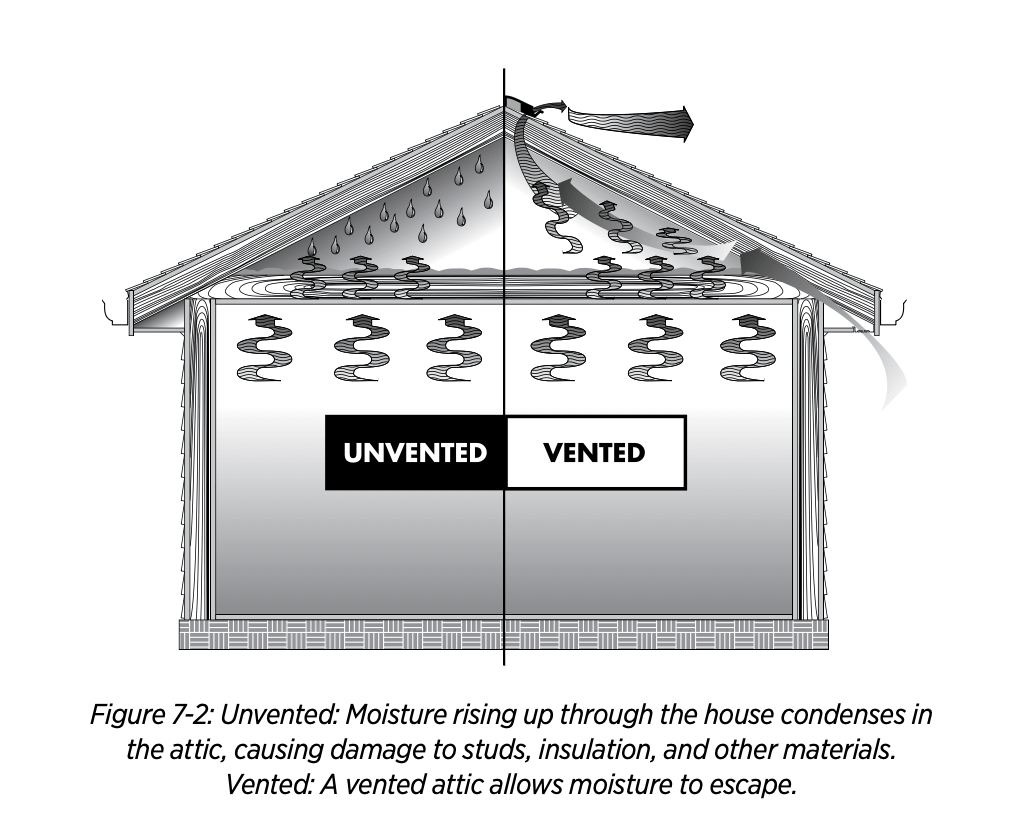
Attic ventilation is a steady flow of outside air through your attic, in through vents low on the roof and out through vents near the peak. Without it, the attic traps summer heat and the moisture from showers, cooking and humidifiers. The ENERGY STAR guide to attic ventilation lists heat, moisture, shingle life and ice dams among the reasons that airflow matters, and each one shows up in your home in a different way.
Why is my upstairs so hot?
On a sunny day your roof soaks up heat and passes it to the attic underneath. Without enough airflow, that heat has nowhere to go, so it settles into the rooms directly below, which is why upstairs bedrooms can feel stuffy while the main floor stays comfortable. The same trapped heat causes a different problem once the snow arrives.
Why do I get icicles every winter?
Warm attic air melts the snow on your roof, and the water refreezes at the cold edge as icicles and ice dams, which can back water up into your ceilings and walls. Ventilation is one of three defenses, along with enough insulation and a waterproofing underlayment at the roof's edges. A roofer can tell you which of the three your roof may be missing.
CRA's guide to how long your roof should last in Colorado's climate covers snow, ice and freeze-thaw cycles in more detail.
How do I know if my attic ventilation is the problem?
Hot rooms and icicles are the easiest signs to spot, and the table below covers four quieter ones. Each can have other causes, so a roofer should confirm what is behind it.
| What you notice | What it may mean |
|---|---|
| Snow melting off your roof faster than your neighbors' | Heat is escaping through the roof |
| Water stains on ceilings, especially near outside walls | Water is getting in, possibly from an ice dam |
| Shingles curling or blistering | Heat and moisture may be wearing the shingles |
| Peeling paint or rot on the eaves | Moisture is getting into the wood |
Why does it matter that my roofer inspects my attic?
Many of these problems start in the attic, out of sight from the driveway. Colorado homes tend to be under-ventilated, and not every roof inspection includes the attic. A roofer who goes into the attic can find frost, dark wood stains, a musty smell or damp insulation. Slate Baker of Lomanco Vents shared what one visit turned up: on a home he recently visited:
Sometimes a roof inspection can reveal more than just wear and tear on shingles. In one recent case, a contractor was called out to take a look at a home and noticed signs of mold in the attic. The homeowner’s child had been dealing with health issues, and after further medical evaluation, the mold was confirmed as part of the problem.
The situation is a reminder that a roof is more than what you see from the outside. Good attic ventilation and a thorough roof inspection can help identify hidden issues that may affect both the home and the people living in it.
When roofing professionals take the time to look at the full roof system — including the attic space — they may catch problems early and help protect the home from bigger issues down the road.
Slate Baker, Lomanco Vents
An attic check can also protect your shingle warranty. CRA's Steep Slope Roof Ventilation advisory bulletin notes that nearly every shingle manufacturer ties warranty language to proper ventilation. To compare warranty types, read Roofing Warranty Terms Explained.
What kinds of attic vents are right for my home?
Air moves through an attic the way a breeze moves through a house, so it needs a way in and a way out. Soffit vents and rooftop intake vents let air in, and ridge vents, box vents, gable vents, wind turbines and powered fans let it out, according to ENERGY STAR and GAF. The right mix depends on your roof and attic, and mixing exhaust types can disrupt airflow, so a roofer should design a balanced system for your home.
Wondering where your attic stands? A trusted Colorado roofer can take a look and tell you what it would take to get your house feeling fresh again. Find a CRA member contractor near you.
Frequently Asked Questions
Does Colorado's weather make attic ventilation more important?
Colorado's high-altitude sun heats roofs hard in summer, and spring and fall temperatures swing above and below freezing, according to CRA's guidance on roof life in Colorado's climate. A roof can face both heat and moisture problems in the same year.
Should my attic be checked when I replace my roof?
A replacement opens up the roof, which makes it a convenient time for a roofer to check the attic and sort out any airflow problems alongside the new shingles.
Will better ventilation lower my energy bills?
Possibly, though savings vary by home and ENERGY STAR does not put a number on them. It does warn that a misused attic fan can make an air conditioner work harder and raise summer utility bills.
Is attic ventilation the same as attic insulation?
Insulation slows heat moving between your living space and the attic, while ventilation moves air through the attic to carry heat and moisture out. ENERGY STAR cautions against covering soffit vents with insulation, which blocks the air coming in.
Do I need more vents if my attic feels hot?
A hot attic can come from several causes, including insulation and air leaks, so more vents may not fix it. A roofer can look at the whole attic and explain what, if anything, it needs.