
Colorado's New 2026 Wildfire Resiliency Code: What Roofing Contractors Need to Know
What's covered in this article:
-
What changed with the Colorado Wildfire Resiliency Code
-
Why it's relevant to roofing contractors
-
Residential specific social media tips
-
Important information and next steps before you bid
Colorado's New 2026 Wildfire Resiliency Code: What Roofing Contractors Need to Know
At CRA's September 10 seminar with the IIBEC Colorado Chapter, speakers from the Colorado Division of Fire Prevention and Control, Jefferson County Building Safety, and the roofing industry explained how the new wildfire code is being put into practice. Here's what CRA members need to know.
What Changed:
The Colorado Wildfire Resiliency Code (CWRC), Version 1.0, took effect June 1, 2025. It sets statewide wildfire hardening standards for buildings in the wildland-urban interface (WUI), the areas where development meets wildland vegetation. Jurisdictions across Colorado are now adopting and enforcing it.
Requirements depend on the property's fire hazard severity:
-
Class 1 (low):
-
Class A roof covering (ASTM E108 or UL 790)
-
Metal valley flashing (26-gauge minimum) over a 36-inch-wide cap sheet
-
Noncombustible gutters and downspouts
-
Vents covered with noncombustible mesh no larger than 1/8 inch or tested to ASTM E2886
-
-
Class 2 (moderate or high): everything in Class 1, plus...
-
Protected eaves, soffits, and fascia
-
6 inches of metal or noncombustible flashing at roof-to-wall intersections
-
noncombustible, fire-retardant-treated, or ignition-resistant exterior wall material
-
Why It's Relevant:
The state sets the baseline, but each jurisdiction adopts the code, adds its own amendments, and runs its own permitting and enforcement. The same job can be handled differently from one city or county to the next, which makes things harder for contractors who work in multiple jurisdictions.
The code also changes what you need to have ready before a permit is approved. Some jurisdictions now expect every product to be listed on the drawings, and general notes like "Class A roof assembly" may not be accepted. Jefferson County's plans examiners, for example, take this approach. Contractors who don't have their materials and documentation lined up early risk permit delays and rework.
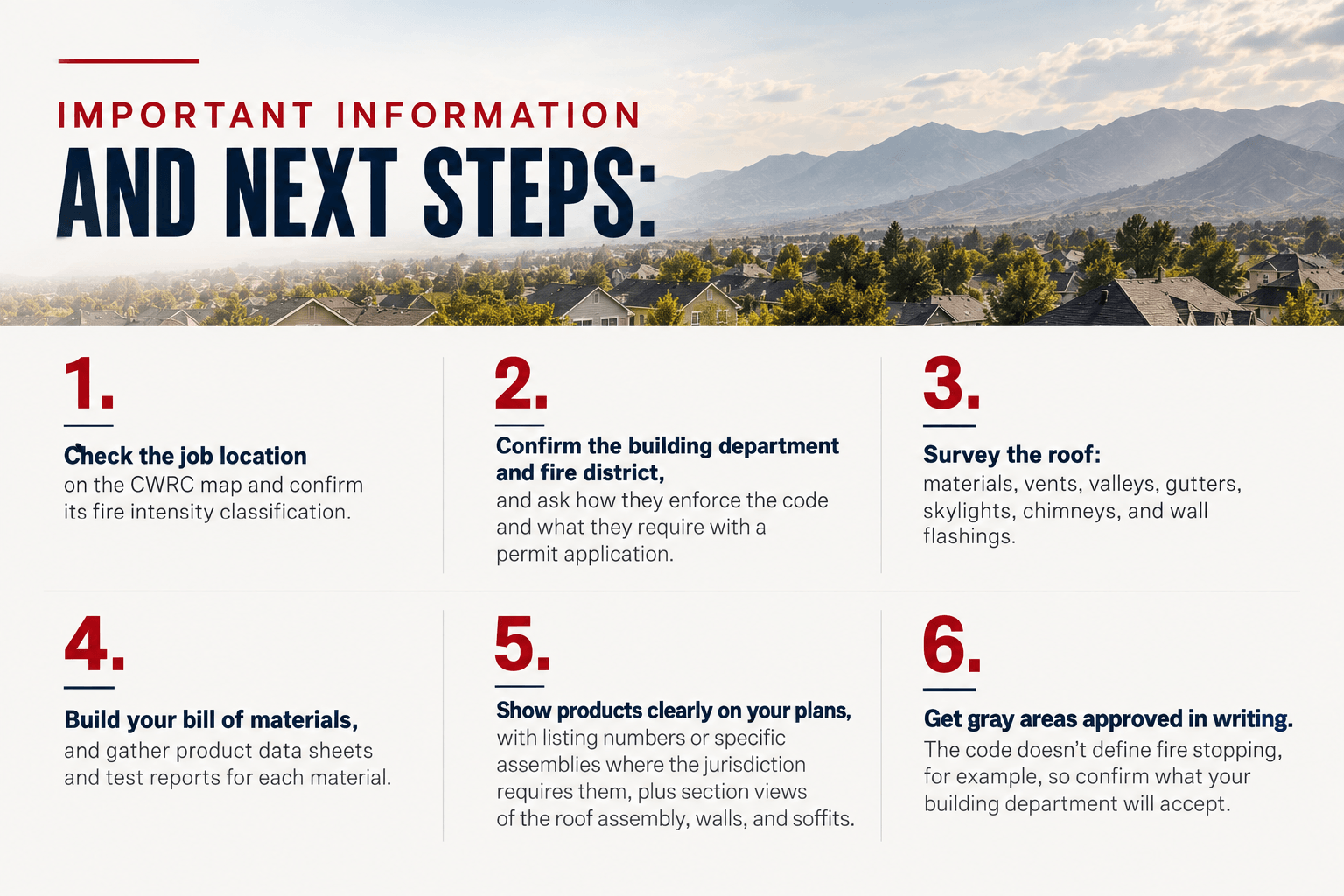
Important Information and Next Steps:
-
Check the job location on the CWRC map and confirm its fire intensity classification.
-
Confirm the building department and fire district, and ask how they enforce the code and what they require with a permit application.
-
Survey the roof: materials, vents, valleys, gutters, skylights, chimneys, and wall flashings.
-
Build your bill of materials, and gather product data sheets and test reports for each material.
-
Show products clearly on your plans, with listing numbers or specific assemblies where the jurisdiction requires them, plus section views of the roof assembly, walls, and soffits.
-
Get gray areas approved in writing. The code doesn't define fire stopping, for example, so confirm what your building department will accept.
Resources:
The Division of Fire Prevention and Control keeps the code, the map, and a free education series at dfpc.colorado.gov/colorado-wildfire-resiliency-code.
This article is for educational purposes only and isn't code compliance advice. Contractors are responsible for meeting applicable codes and local requirements.