
5 Questions to Ask Your Roofing Contractor About Attic Ventilation
Key Takeaways
- A roof inspection should include the attic, where heat and moisture can collect out of sight.
- Attic ventilation brings air in low and sends it out high, and the two sides need to stay in balance.
- Mixing exhaust vent types can disrupt airflow, so ask what will happen to any vents already on your roof.
- Insulation should never cover the soffit vents that feed air into the attic.
- Ventilation is one of three defenses against ice dams, along with insulation and waterproofing underlayment.
- Ask which building code edition applies to your roof and how the ventilation plan fits your shingle warranty.
Most roofing estimates spend plenty of time on shingles and price, while attic ventilation gets a single line or none at all. Slate Baker of Lomanco Vents recently shared a story that shows what a closer look can turn up:
How a Routine Roof Visit Helped Uncover a Hidden Mold Problem
Sometimes a roof inspection can reveal more than just wear and tear on shingles. In one recent case, a contractor was called out to take a look at a home and noticed signs of mold in the attic. The homeowner’s child had been dealing with health issues, and after further medical evaluation, the mold was confirmed as part of the problem.
The situation is a reminder that a roof is more than what you see from the outside. Good attic ventilation and a thorough roof inspection can help identify hidden issues that may affect both the home and the people living in it.
When roofing professionals take the time to look at the full roof system — including the attic space — they may catch problems early and help protect the home from bigger issues down the road.
Slate Baker, Lomanco Vents
Your roof deck and shingles share an air space with the attic, so ventilation reaches well beyond the vents themselves. For the broader picture of what to ask before you hire, see the 10 questions to ask before hiring a roofing contractor in Colorado from the Colorado Roofing Association (CRA).
What will you check in my attic before you give me a price?
A thorough roof inspection includes the attic, because heat and moisture collect there before they reach the roof deck and shingles. In a poorly ventilated attic, moisture can condense on the underside of the deck, and an overheated attic combined with that moisture can distort the decking and shingles. Slate’s story is a reminder that an attic can hold problems no one sees from the driveway.
A strong answer sounds like a contractor who plans to go into the attic, check the insulation for water damage and walk you through whatever they find.
A reason to follow up is an estimate that covers shingles and flashing only and never mentions the attic.
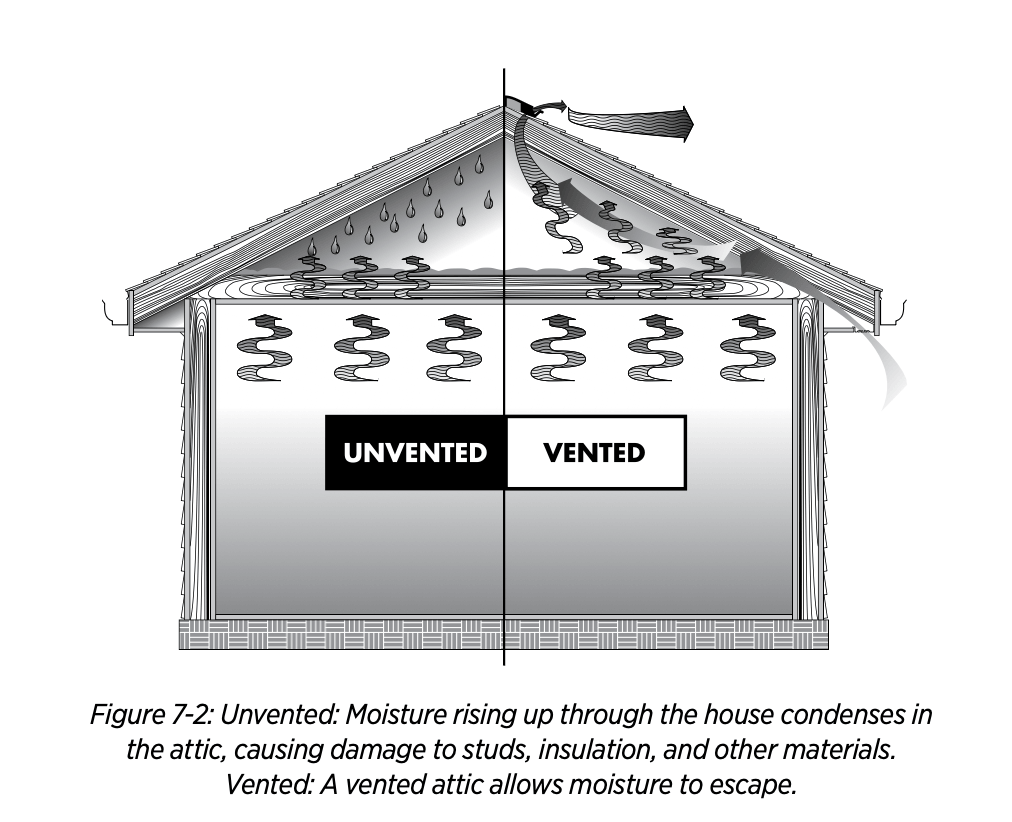
How will you keep air moving through my attic?
Attic ventilation works by letting air in low on the roof through intake vents and out high through exhaust vents, and the two sides need to stay in balance. Intake open area should equal or exceed exhaust open area, with about half of the vent area high and half low, so the lower vents do not limit airflow. Homes with little or no roof overhang can use roof-top intake vents in place of, or alongside, soffit vents.
Mixing vent types adds another wrinkle. When a ridge and soffit system joins an attic that already has gable vents, roof louvers, wind turbines or power fans, the other vents should be removed or blocked so they do not shortcut the airflow.
For a broader look at how attic ventilation protects a roof over time, see The Importance of Attic Ventilation for Your Roof’s Health and Performance.
A strong answer names the intake and exhaust vents the contractor plans to use, explains how they balance and says what will happen to any vents already on your roof.
A reason to follow up is a new ridge vent added alongside existing gable vents, louvers, turbines or fans with no plan for them.
How will you keep insulation from blocking the vents?
Insulation that covers the soffit intake area keeps outside air from entering the attic and moving through it. Where eave vents are installed, the 2018 International Residential Code calls for a minimum 1-inch space between the insulation and the roof sheathing.
A strong answer covers keeping the soffit vents clear and leaving air space above the insulation.
A reason to follow up is a plan to add insulation that never mentions the vents.
How does your plan help prevent ice dams?
Ventilation is one of three defenses against ice dams, along with adequate insulation and a waterproofing shingle underlayment, a self-adhering layer installed at vulnerable areas such as the eaves. Ice dams form when warm air collects in the attic, the lower edge of the roof stays cold and heavy snow builds up. Snow acts as insulation, so attic heat can melt it even when outside temperatures are below freezing, and the meltwater refreezes at the colder eaves. Over several days that cycle can back water up under shingles, soak the decking and damage ceilings and walls.
A strong answer treats ventilation, insulation and underlayment as a package, because ventilation alone is not a complete solution.
A reason to follow up is ventilation offered as the only fix.
CRA’s guide to how long your roof should last in Colorado’s climate covers snow, ice and freeze-thaw cycles in more detail.
Which code and warranty requirements does your plan follow?
Ventilation requirements come from the building code your city or county has adopted and from the shingle manufacturer’s installation instructions. CRA’s Building Code & Standards Committee recommends following the ventilation requirements in the adopted codes in its Steep Slope Roof Ventilation advisory bulletin, which also notes that nearly every shingle manufacturer includes warranty language tied to proper ventilation.
For a plain-language look at the difference between workmanship and manufacturer warranties, check out our new guide on Roofing Warranty Terms Explained.
A strong answer names a specific code edition and any local amendments, then connects the ventilation plan to your warranty terms.
A reason to follow up is a contractor who cannot say which code applies to your roof.
How do I find a roofer who will answer these questions?
The contractor in Slate Baker’s story was there for a routine visit and still noticed what was happening in the attic. Bring these questions to your next roofing conversation and listen for how a contractor talks about the whole roof. Find a trusted Colorado roofer in the CRA Member Directory and bring this list along.
Frequently Asked Questions
What does attic ventilation do for a roof?
Attic ventilation keeps air moving through the attic, which helps limit moisture under the roof deck, heat that builds up beneath the shingles and heat that can radiate into your living space. It is also one of three defenses against ice dams, alongside insulation and waterproofing underlayment.
Are power attic fans a good ventilation fix?
Power fans can move a large volume of air, but they cannot vent moisture away in winter unless they have humidistat controls, and each fan needs proper intake ventilation. Ask your contractor how a fan would work with the vents already on your roof.