
Before You Replace the Roof, Look Inside the Attic
-
What’s covered in this article:
-
What a Boulder community service project revealed about attic ventilation.
-
Why ventilation deserves attention before you prepare an estimate.
-
What contractors should look for.
-
A checklist to help your team evaluate and document existing conditions.
-
Attic Ventilation Before Roof Replacement: What Contractors Should Check
A Boulder Attic Inspection Reveals a Hidden Problem
During a recent community service project in Boulder, Slate Baker of Lomanco, working with CRA member Colorado Native Roofing & Exteriors, learned that a family had visited multiple clinics seeking answers about their daughter’s ongoing health concerns. When he inspected the attic, he found no intake ventilation and a large amount of widespread mold on the underside of the roof decking and trusses.
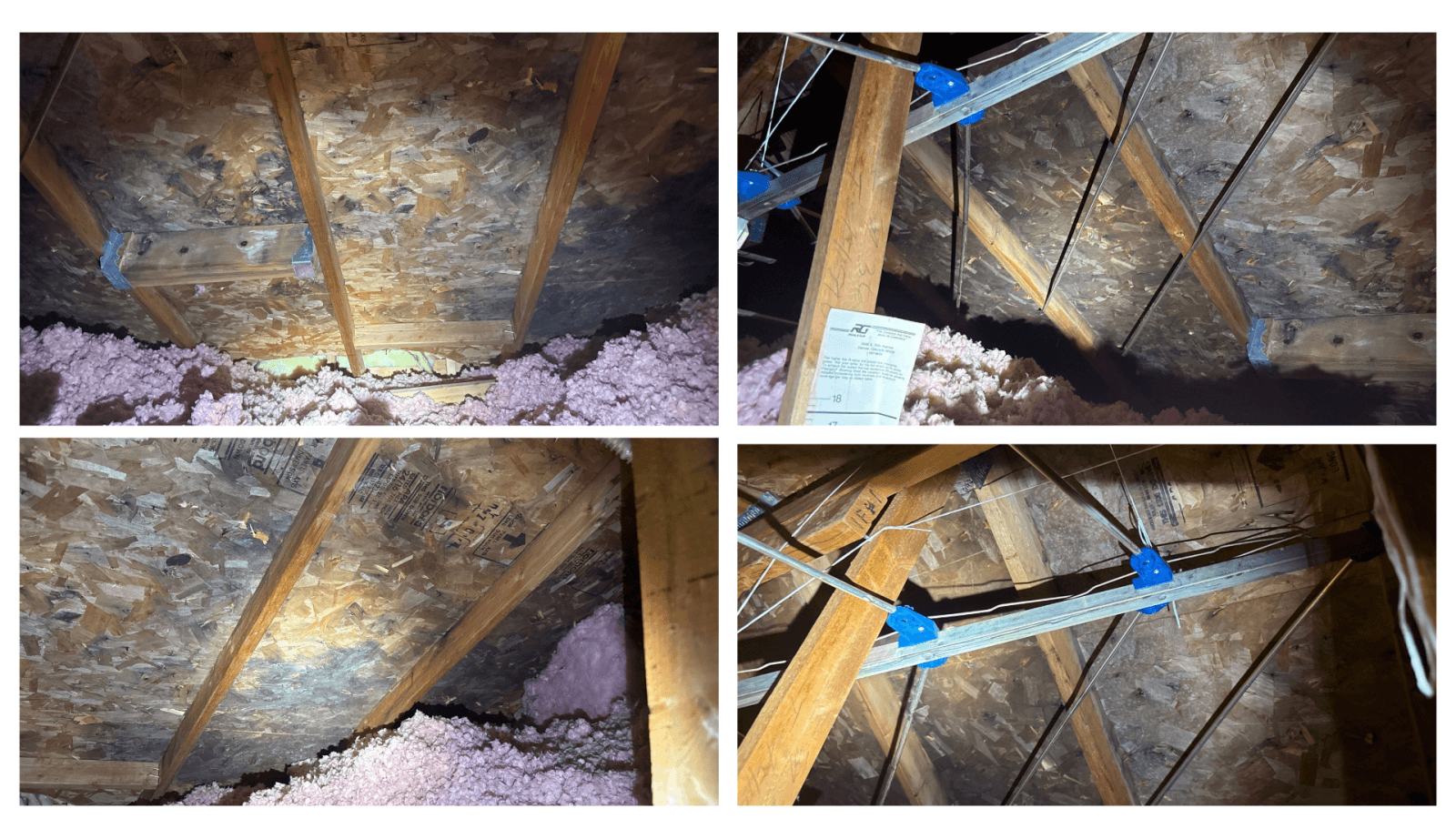
The inspection did not directly diagnose the cause of her symptoms, but it uncovered a serious health concern that an exterior roof evaluation would have missed.
For roofing contractors, the project offers a practical reminder: understand the conditions underneath the roof before replacing it.
Identifying concerns early gives contractors an opportunity to explain existing conditions, account for necessary work, and involve other qualified professionals when needed.
Why It Matters to Your Business:
A homeowner may call about damaged shingles or an aging roof without knowing there is a concern inside the attic. If your team’s evaluation stops at the roof surface, those conditions will likely go unaddressed.
For residential roofing contractors, evaluating ventilation can support:
-
More complete estimates. Identifying blocked intake, damaged decking, or other concerns early helps you define the work before installation begins.
-
Clearer homeowner expectations. Photos and measurements help explain recommendations beyond replacing shingles.
-
Fewer avoidable callbacks. Addressing existing conditions can help prevent problems from continuing after the replacement.
-
Better documentation. Recording what your team found helps distinguish existing conditions from the work your company performs.
What Your Team Should Evaluate:
-
Signs of Moisture or Damage
-
Check attic areas for staining, rusty nail tips, suspected mold, and damaged decking. Ask homeowners about previous leaks, condensation, or unusually warm upstairs rooms to help guide the inspection.
-
-
Intake and Exhaust
-
Check that intake vents are clear of insulation or debris, and evaluate intake and exhaust together. Confirm vent sizing and compatibility using applicable codes and manufacturer guidance rather than assuming the existing setup is adequate.
-
-
Other Moisture Sources
-
Roof leaks, air leaking from the living space, and bathroom or kitchen exhaust ducts emptying into the attic can also contribute to moisture problems. Identify concerns that need further evaluation and involve a qualified specialist when they fall outside your team’s expertise.
-
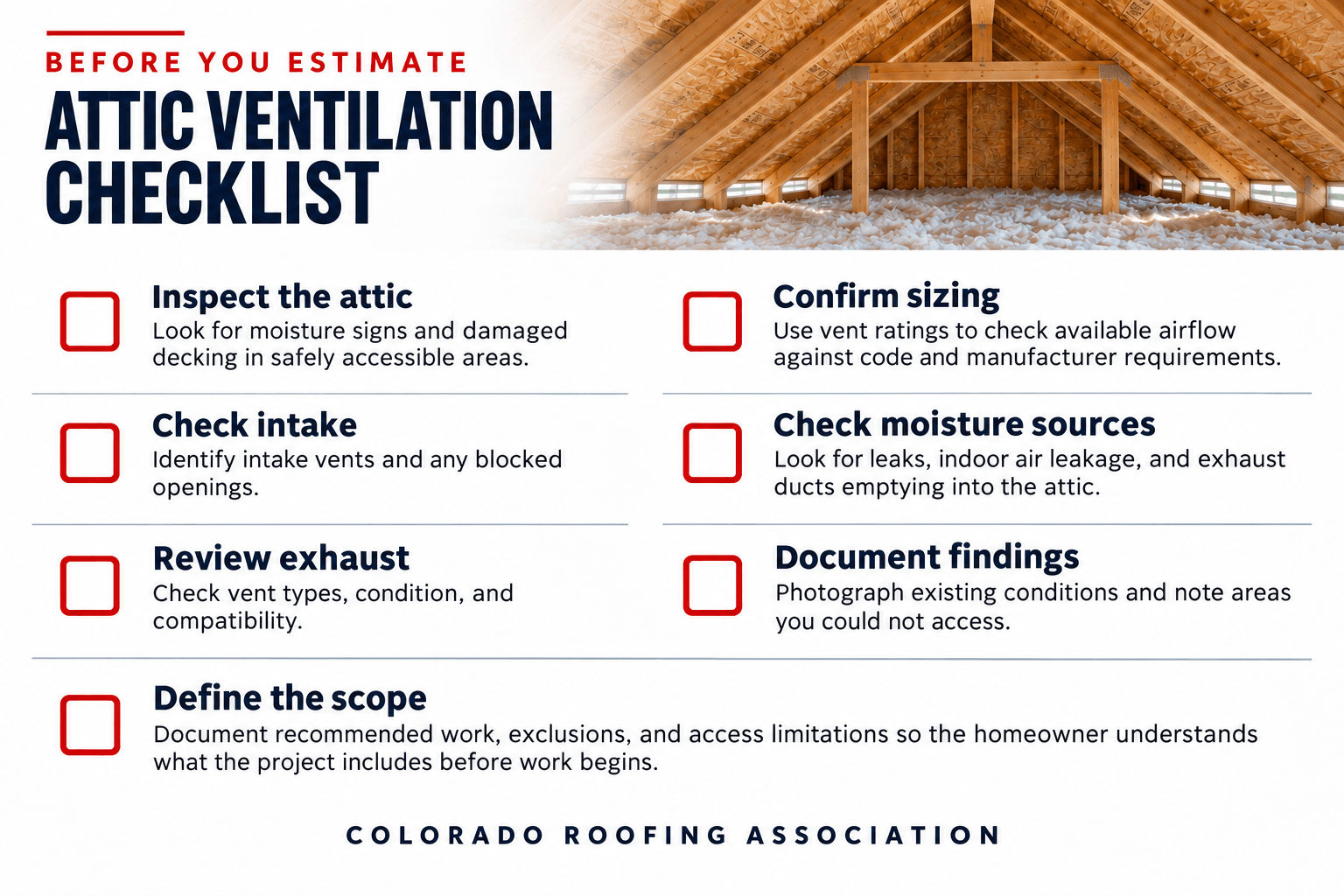
This Boulder project is a good example to bring up at your next team meeting. Does everyone on your team check attic conditions before putting together an estimate, or does it depend on who's doing the inspection? It's worth making sure everyone is on the same page about what to look for, what to document, and when to bring in another professional.
Based primarily on an interview with Slate Baker, Lomanco. This article focuses on residential attic ventilation. Commercial roof systems are not covered, as their ventilation needs vary by building design, roof assembly, and codes. Contractors should confirm applicable local codes, assembly requirements, and manufacturer instructions for each project.