
Is It Normal for a New Roof to Lose Granules?
Key Takeaways
- A small amount of granule shedding in gutters after a new asphalt roof is normal. It's usually just excess "rider granules" left over from manufacturing, not a sign of a defective installation.
- This shedding is typically heaviest right after installation and tapers off over several months as it self-corrects, per GAF's technical guidance.
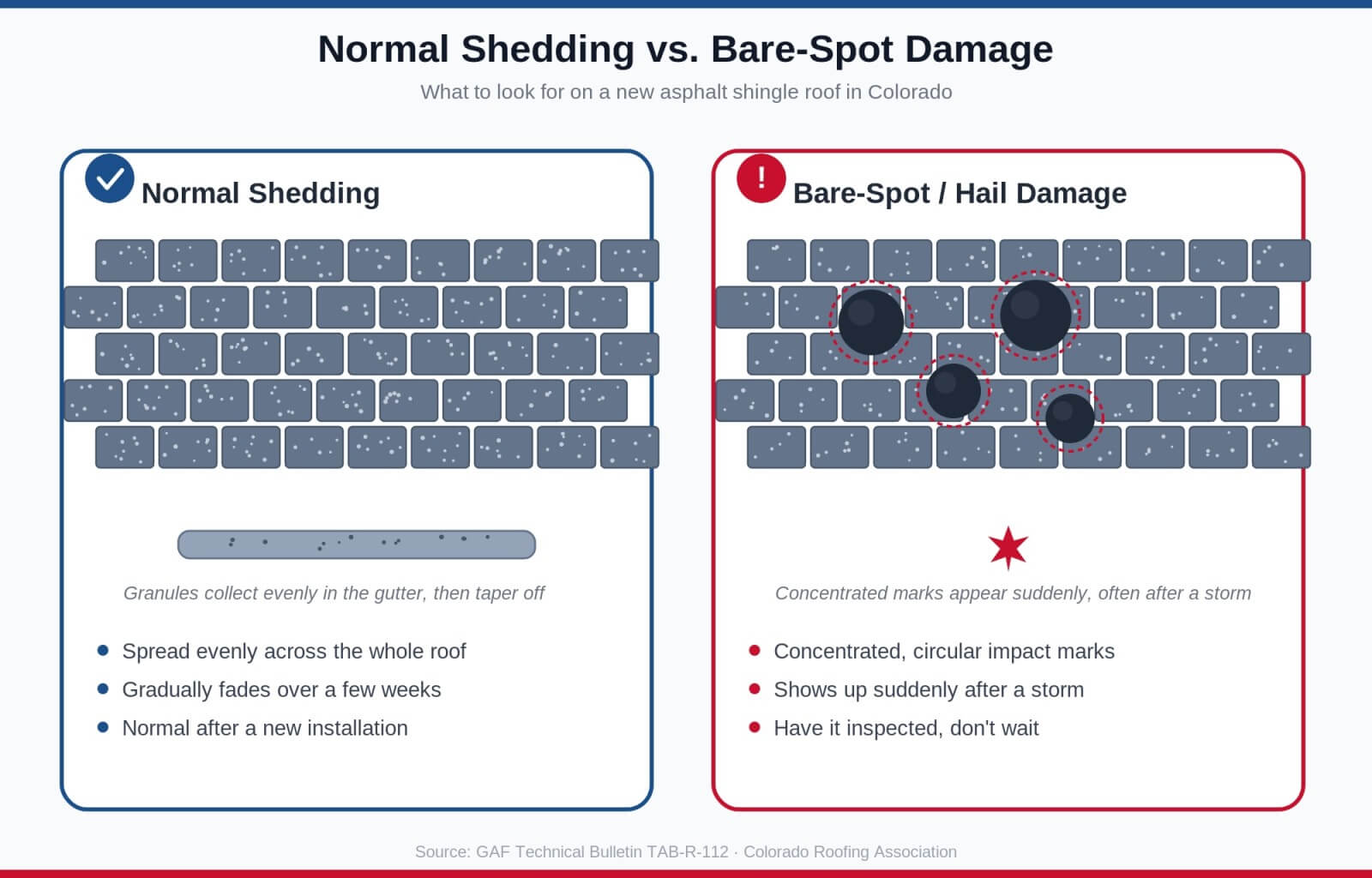
- In Colorado, it's worth distinguishing normal shedding from hail damage: shedding is spread evenly across the roof and fades over time, while hail creates dark, circular impact spots that don't improve and often show up right after a storm.
- Most manufacturer warranties cover material defects, not issues caused by improper installation, repair, or maintenance, so persistent granule loss is worth documenting.
- Contact a licensed roofing contractor if granule loss continues for several months, worsens instead of improving, or leaves visible bare or discolored patches on the shingles.
- The Colorado Roofing Association's member directory can help homeowners find a licensed, insured contractor for an inspection.
Finding granules in gutters after a new asphalt roof installation can be alarming, but a small amount of early shedding is usually normal. This post explains why new shingles release loose granules, how long the process typically lasts, and when granule loss could point to a larger problem.
What Do Granules Do on an Asphalt Roof?
Granules protect the asphalt layer beneath each shingle from sunlight, contribute to fire resistance, and give the roof its color and surface texture. When too many granules wear away, the asphalt becomes exposed and deteriorates more quickly. That is why granule loss matters and why its condition is worth watching over the life of a roof.
Is It Normal for a New Roof to Lose Granules?
Some shedding after installation is normal and expected. During manufacturing, shingle producers apply more granules than the asphalt surface will permanently hold. These excess particles, sometimes called "rider granules," ensure full coverage across the shingle and prevent hot asphalt from sticking to production line equipment. According to a technical bulletin published by GAF, one of the largest shingle manufacturers in the U.S., early shedding is typically most pronounced right after installation, gradually reduces over time, and in most cases is self-correcting with no effect on the shingles' long-term performance.
Handling, cutting, and nailing shingles during installation also loosens granules, and foot traffic across the roof surface during the job displaces others. Granules appearing in gutters or around downspouts in the weeks after a new roof goes on are generally part of this process.
How Much Granule Loss Is Too Much?
The easiest way to tell normal shedding from a potential problem is to look at how long it lasts, where it appears on the roof, and whether it is getting better or worse over time. The table below describes what each pattern typically indicates.
| Usually Normal | Contact a Roofing Contractor |
| A small amount appears in gutters shortly after installation | Large amounts continue appearing several months after installation |
| The amount gradually decreases after rain and weather exposure | The amount stays the same or increases over time |
| Shingles still appear evenly covered when viewed from the ground | Shingles have visible dark patches or bare areas |
| Granules appear across multiple gutters or downspouts | Loss appears concentrated in one section of the roof |
Why Colorado's Climate Makes This Worth a Closer Look
Colorado has a lot of hail. Hail can knock granules loose too, and it's easy to mix up with normal shedding.
Here's the difference:
- Normal shedding spreads evenly across the roof and fades over a few weeks.
- Hail damage shows up as round, concentrated marks, usually right after a storm.
Because hail can affect more than the shingle granules, it is important to look for other signs of damage as well. Learn more about 5 types of roof storm damage Colorado homeowners should know.
Does Granule Loss Affect Roof Warranty Coverage?
Most manufacturer warranties are intended to cover material defects and do not cover issues resulting from improper installation, repair, or maintenance. Many roofing installation errors are difficult for homeowners to identify and may not cause visible damage or leaks until months or years later, which is one reason persistent or worsening granule loss is worth a professional look rather than a wait-and-see approach. Homeowners who want a fuller breakdown of how these terms work can review CRA's guide to roofing warranty terms.
When Should a Homeowner Call a Roofing Contractor?
If shedding is heavy, continues for several months, or leaves visible bare areas on the shingles, a professional inspection is the appropriate next step. Homeowners can search the Colorado Roofing Association member directory to find licensed, insured contractors in their area.
For a broader look at what roof maintenance and repair involves, this resource covers what Colorado homeowners should know.
New Roof Granule Loss: Frequently Asked Questions
How long does granule shedding typically last on a new roof?
Shedding from rider granules is most noticeable right after installation and typically tapers off over several months. GAF's published guidance recommends allowing that window to pass before drawing conclusions about whether a problem exists.
What does it mean when granules appear in gutters after installation?
Granules in gutters during the first weeks after a new installation are typically excess material from the manufacturing process working its way free, not a sign of shingle failure. The condition is common and, in most cases, self-correcting.
What should homeowners do if granule loss seems excessive?
Homeowners who observe dark patches on shingles, granule buildup that is not decreasing, or loss concentrated in one area should document the condition with dated photographs, note when the pattern began, and contact a qualified roofing contractor for an inspection.
Find a Licensed Roofing Contractor in Colorado
Seeing a few loose granules after a new roof installation is usually normal. If the shedding is heavy, continues for several months, or leaves visible bare areas on the shingles, have the roof inspected by a qualified contractor. The Colorado Roofing Association member directory connects homeowners with licensed, insured roofing contractors across Colorado.