Why Hands-On Roofing Training Matters for Colorado Homeowners
Key Takeaways
- Colorado issues roofing licenses at the city level, not statewide, so training standards vary widely across contractors.
- CRA members must carry at least $500,000 in general liability insurance and agree to a Code of Ethics before joining.
- Hands-on training teaches contractors to handle Colorado's hail, snow, and temperature extremes that damage roofs.
- CRA members complete continuing education requirements to stay current with new materials and installation methods.
You need a new roof, and you're staring at a list of contractor names that all look the same. One promises the lowest price. Another knocked on your door after the last hailstorm. A third has a professional website but almost no reviews. How do you know which roofer actually knows what they're doing?
The answer starts with understanding how roofing contractors learn their trade. In Colorado, roofing contractor training and standards matter more than in many states because there is no single statewide license to rely on. The quality of your roof depends heavily on whether your contractor pursued real education or simply met minimum local requirements.
Why Roofing Standards Matter for Colorado Homeowners
Colorado does not issue a statewide roofing contractor license. Instead, cities and counties handle licensing individually, which means standards vary depending on where you live. For a fuller look at what this means in practice, see the CRA's guide to whether Colorado roofing contractors need a license.
In Denver, a roofing supervisor must document two years of field experience across 24 projects from 24 different months, with at least 75% of that work on low-slope commercial roof systems. Aurora requires contractors to pass the International Code Council (ICC) Roofing Contractor/Subcontractor exam. In some rural counties, pulling a permit may be the only formal requirement.
This patchwork system puts the burden on homeowners to verify contractor qualifications. You cannot assume a licensed Colorado roofing contractor meets the same standards everywhere in the state. Without consistent requirements, the difference between contractors often comes down to their commitment to ongoing education and professional accountability.
One area where inconsistent licensing creates real risk: unlicensed contractors may operate legally in some jurisdictions while being ineligible to work in others. Verifying local licensing directly with your building department is the only reliable check.
How the Colorado Roofing Association Addresses the Licensing Gap
The Colorado Roofing Association (CRA) fills the gaps left by inconsistent municipal licensing. Since 2012, the organization has focused on raising Colorado roofing contractor standards through education, ethics requirements, and member accountability.
To become a CRA member, contractors must show proof of business operation for at least two years and carry general liability insurance of at least $500,000. Members agree to follow the CRA Code of Ethics, which covers honest communication, quality workmanship, and fair business practices.
These requirements go beyond what most municipalities require. They indicate that a contractor takes their professional reputation seriously enough to meet higher standards and submit to peer accountability. You can learn more about what distinguishes CRA members from other contractors, or use the CRA's contractor search tool to find a vetted member in your area.
Why Hands-On Roofing Training Leads to Better Results
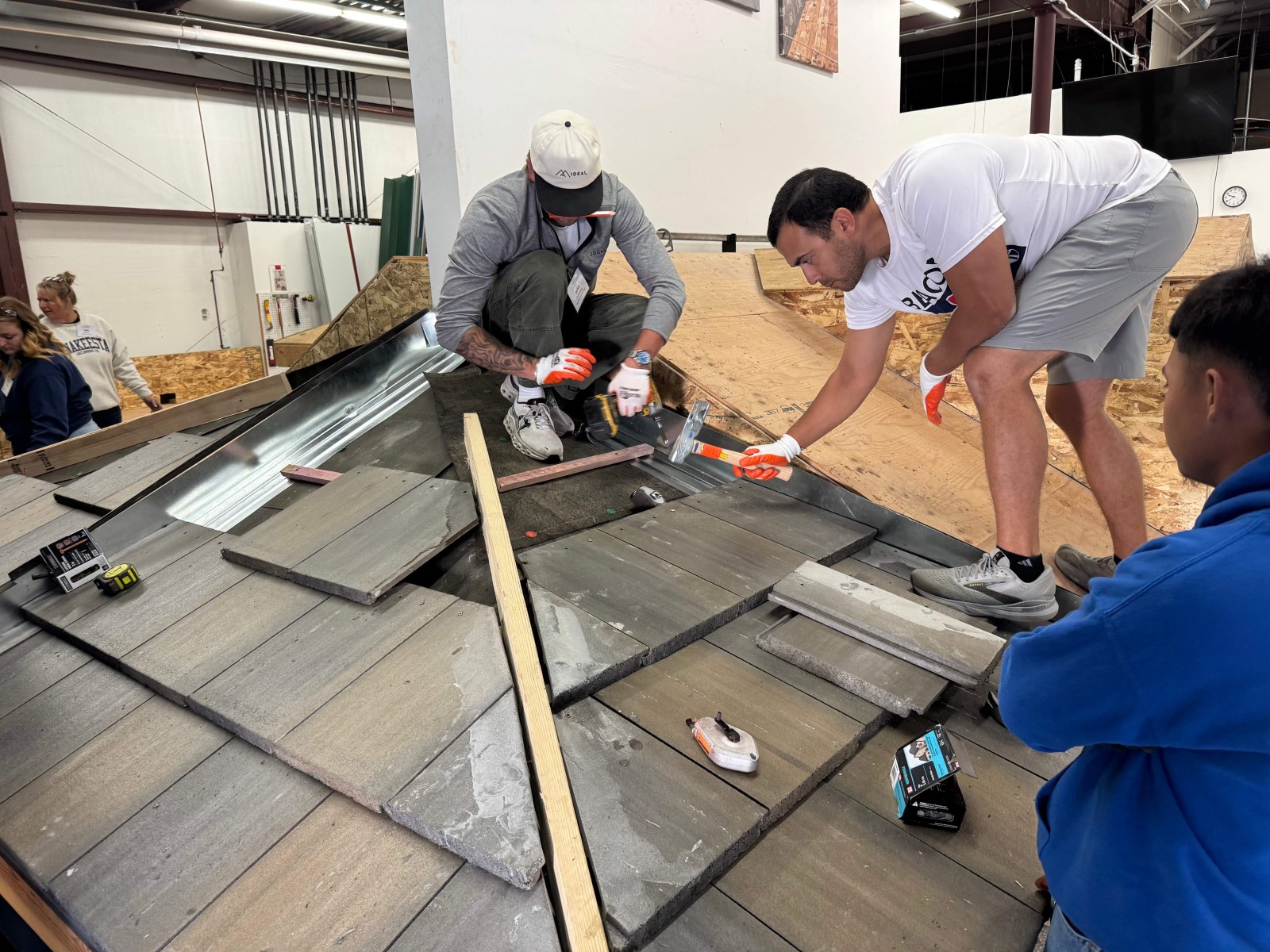
Roofing installations involve dozens of judgment calls that only become clear through hands-on practice. When contractors work through actual installations at the CRA Training Center, they encounter the real consequences of common errors before those errors occur on a customer's home.
Improperly lapped underlayment, for example, allows water to migrate beneath the shingles during a heavy rain event. Flashing installed without sufficient overlap at a chimney base can pass inspection and still develop a slow leak within a season. Ice and water barriers applied too far from the eave leave the most vulnerable section of the roof unprotected during freeze-thaw cycles. These are not theoretical failures; they are the kinds of callbacks that cost homeowners thousands of dollars and erode a contractor's reputation.
Hands-on training at the facility teaches contractors how to identify and prevent each of these failure points. The center offers a virtual tour of the training facility that shows the range of roof structures members practice on. Since the facility opened, it has trained 1,690 members as of 2025, including 199 who completed courses in 2025 alone. These are contractors who chose additional education beyond whatever their local license required.
Colorado's climate makes this training especially important. Contractors need to understand how intense ultraviolet (UV) exposure degrades certain underlayments, how sudden hailstorms affect different shingle classes, and how dramatic freeze-thaw cycles compromise flashing and sealants. Generic training programs do not address these conditions with the same specificity. For more on how Colorado's weather affects roofing systems, see the CRA's guides to hailstorms and your roof and preparing your roof for winter.
How Continuing Education Requirements Keep CRA Members Current
CRA membership does not end with initial training. Members must earn Continuing Involvement Units (CIUs) to maintain their membership standing. CIUs are essentially credits earned by attending workshops, manufacturer training sessions, and industry events.
For homeowners, this requirement has a practical consequence: the contractor arriving at your home is expected to know current materials and methods, not just what was standard when they first entered the trade. Roofing products have changed considerably over the past decade. Synthetic underlayments, improved sealant technologies, and impact-resistant shingle ratings all involve installation considerations that did not exist in older training programs. A contractor who completed training years ago and has not kept current may apply outdated methods to modern materials. The CIU requirement creates a structural incentive to stay informed.
What to Look for When Choosing a Colorado Roofing Contractor
Finding a qualified roofer in Colorado requires looking beyond a local license. The following checklist addresses the qualifications that most reliably distinguish prepared contractors from those who are not. For a more comprehensive guide, see the CRA's resource on selecting a professional contractor and the CRA's 7 tips for choosing a legitimate contractor.
Verify local licensing directly
Contact your city or county building department to confirm the contractor holds the proper license for your jurisdiction. Do not rely solely on the contractor's assurance. Requirements differ significantly between Denver, Aurora, and rural counties.
Confirm insurance coverage
Ask for a current certificate of insurance showing both general liability (at least $500,000) and workers' compensation coverage. Verify that the policy is active, not expired. An uninsured contractor leaves you financially exposed if a worker is injured on your property.
Check for professional association membership
Ask whether the contractor belongs to the CRA or another recognized professional organization. Membership indicates that the contractor has met standards beyond minimum licensing and has agreed to a code of conduct. Use the CRA's trusted roofer search to find vetted members near you.
Ask about training and manufacturer certifications
Inquire about any hands-on training programs the contractor has completed. Many manufacturers certify contractors who have passed installation courses, which may also be required to honor certain product warranties.
Review their history of permits
Legitimate contractors pull permits for all work that legally requires them and can walk you through the inspection process. Contractors who discourage permit applications are a significant warning sign. See the CRA's overview of when a permit is required for roof replacement.
Read reviews with attention to patterns
Look for recurring themes in reviews, particularly around communication, cleanup, and how the contractor handled unexpected problems. A single negative review is less meaningful than a pattern. The CRA has published guidance on how to interpret online reviews for roofing contractors.
Compare bids by scope, not just price
The lowest bid frequently reflects reduced material quality or fewer labor steps. Ask each contractor to specify the materials, underlayment type, and warranty terms so you can make a meaningful comparison.
Be cautious of storm chasers
After a hail or wind event, out-of-town contractors may solicit work aggressively. These contractors may lack local licensing or post-project accountability. The CRA offers resources on how to identify roofing storm chasers and the dos and don'ts of hiring after hail damage.
What CRA Membership Means for Homeowners
A CRA member contractor has voluntarily committed to standards that exceed local licensing minimums. Members agree to follow a Code of Ethics that addresses honest communication, fair pricing, quality materials, and proper installation techniques. This creates a layer of accountability that municipal licensing typically does not provide.
If a dispute arises with a CRA member's work, the association provides a point of contact beyond what a local licensing board may offer. CRA membership does not guarantee a problem-free project, but it does indicate that the contractor values their professional standing enough to be held to a written standard.
The cost difference between a minimally licensed contractor and a well-trained CRA member is often modest relative to the total project cost. That difference tends to pay for itself through fewer callbacks and better long-term performance. For a detailed look at this dynamic, see the CRA's analysis of roofing training and return on investment.
CRA members also stay connected to the broader roofing industry through events, training sessions, and peer networks. This community knowledge can be relevant when a contractor encounters an unusual roof configuration or an emerging material question on your project.
When you are comparing contractors, asking about CRA membership, training history, insurance coverage, and local licensing gives you the information needed to make a well-informed decision. The CRA's contractor search tool is a practical starting point for finding vetted professionals in your area.